
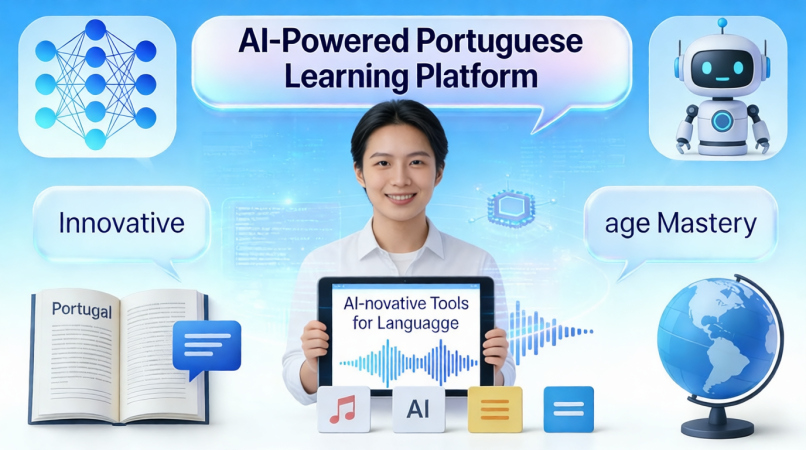
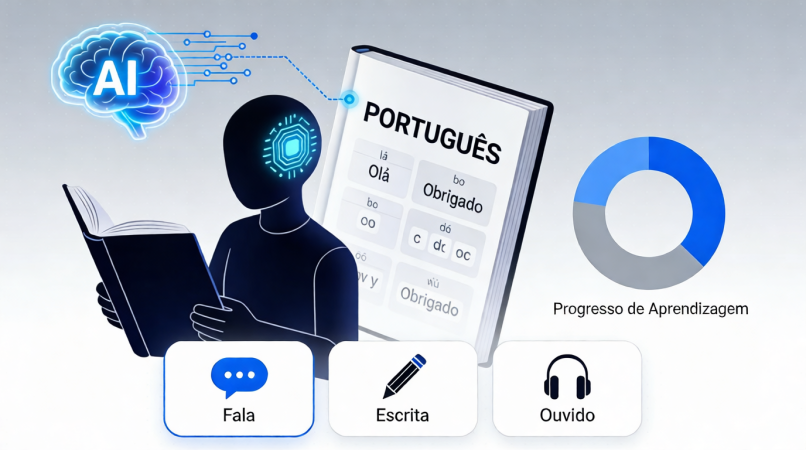
Artificial Intelligence technology is developing at a rapid pace and empowering the growth of various industries. Meanwhile, the Macao government is actively building a "Bilingual Chinese-Portuguese Talent Training Base," which serves as a key measure to deepen the friendly relations between China and Portuguese-speaking countries and to expand cooperation within the Belt and Road Initiative. Under this general trend, this project constructs an AI-assisted Portuguese learning platform with AI Large Language Mode as the core technology. It integrates technologies such as Portuguese TTS, automatic speech recognition and pronunciation detection, along with scenario-based teaching content design and analysis of teaching big data, to provide an intelligent tool for Portuguese teaching and management for universities. On this platform, students can interact with AI for learning purposes, while teachers and schools can monitor the teaching process and obtain relevant analytical data to adjust and improve teaching effectiveness. The project is capable of serving USJ and other schools in Macao, and can also serve as a foundation for collaborative research and application of AI and Portuguese teaching with other universities.
Build a fully functional Portuguese learning platform with the following core features: Intelligent speech recognition (ISR) and pronunciation detection, as well as text-to-speech (TTS) technology. AI large language model (LLM) technology will be utilized to construct personalized and interactive Portuguese language learning scenarios. Typical LLMs, such as GPT, Claude, or Deep Seek and so on, will be available for selection and application on this platform. The functional modules including:
- Speech and listening practice
- Personalized learning paths and progress tracking
- Rich learning resources (Dialogue scenarios, co-related to Portuguese I and II. Fostering patriotic sentiments and promote Chinese culture, etc.)
- learning support with Chinese interface
Further more, the objective of this project is to effectively enhance the Portuguese language teaching and learning efficiency and effectiveness in schools across Macao and related regions through the application of AI technologies.
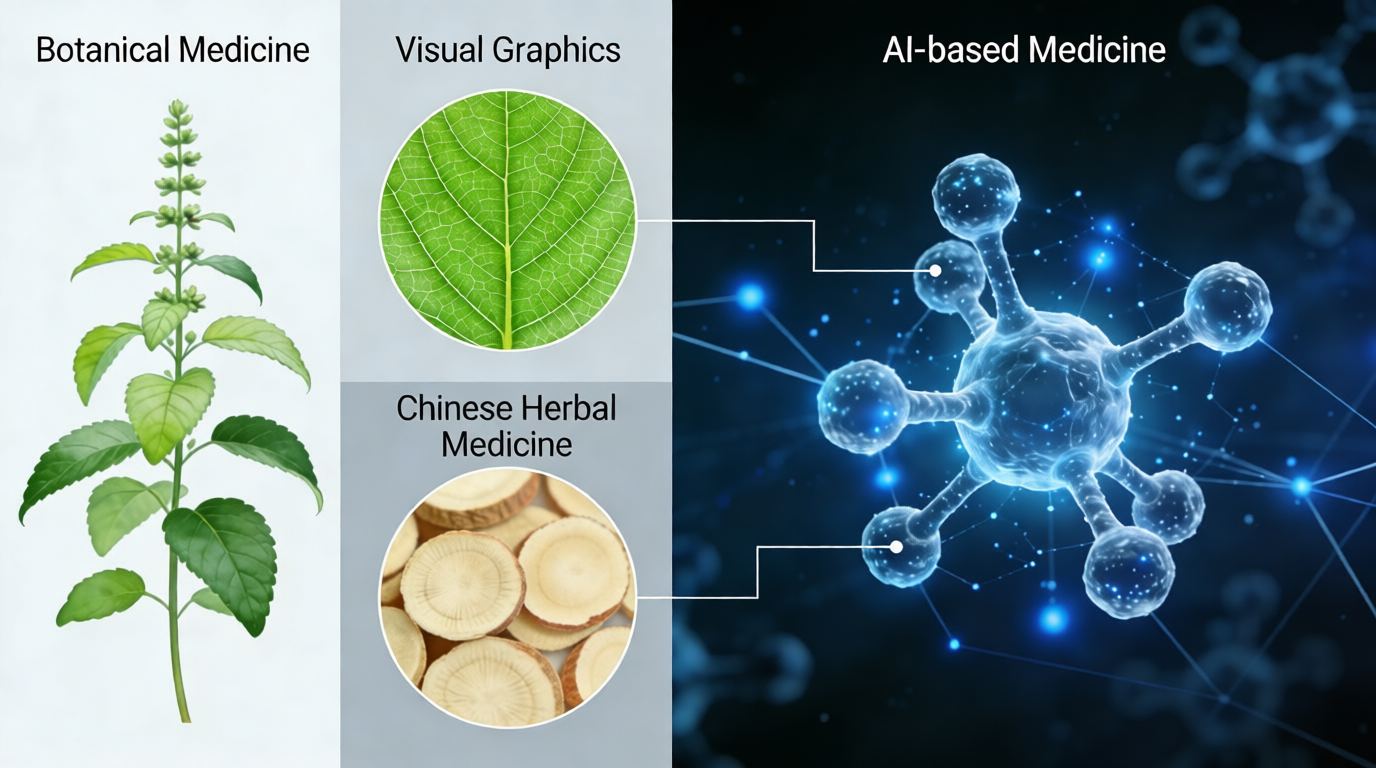
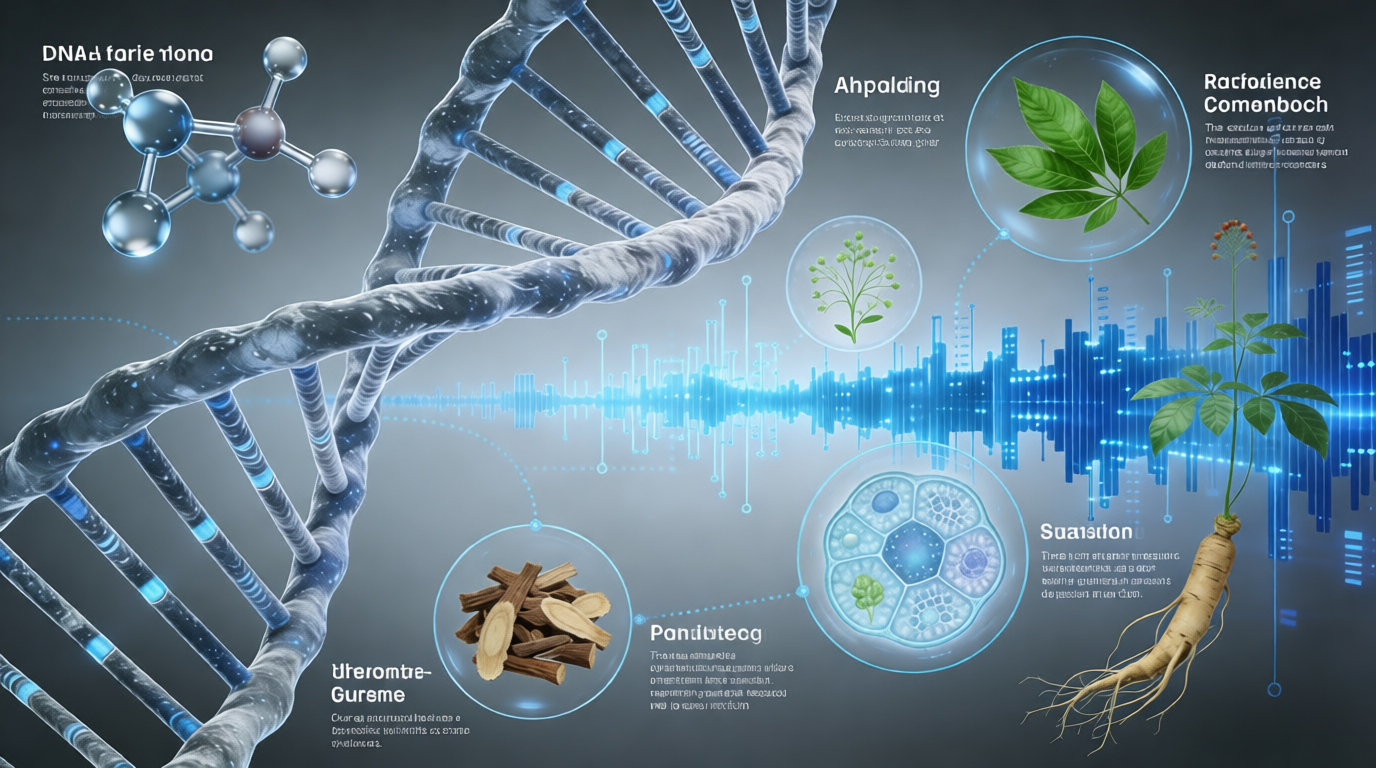
This platform represents a dedicated effort by our AI R&D team to address critical bottlenecks in botanical drug development—including prolonged R&D timelines, unclear mechanisms of action, complex active ingredient profiles, and fragmented knowledge. We are researching and building a specialized AI innovation platform that integrates large language models (LLMs), Retrieval-Augmented Generation (RAG), and fine-tuning techniques.
By systematically consolidating data from classical herbal texts, modern scientific literature, patents, and proprietary experimental datasets—and further integrating cellular nutrition and bio-fermentation technologies—we are constructing a comprehensive, botanical-drug-specific knowledge graph. This graph spans the entire R&D chain, linking “herbs → chemical constituents → molecular targets → biological pathways → syndromes (TCM patterns) → formulations.”
Technically, the platform adopts a tripartite architecture: “Large Model + RAG + LoRA Fine-tuning.” It uses advanced LLMs such as DeepSeek or Qwen as the foundation. RAG, enhanced with vector feedback mechanisms, dynamically injects up-to-date domain knowledge to improve response accuracy. Additionally, the model undergoes LoRA-based fine-tuning using expert-annotated instruction datasets, enabling it to master complex reasoning paradigms unique to botanical drugs—particularly the synergistic effects of multi-component formulations.
Initial validation has already demonstrated the feasibility of this technical approach. The platform holds strong promise to reduce the traditional botanical drug R&D cycle from 4–6 years to just 1–2 years, significantly lowering costs while enhancing overall R&D efficiency.

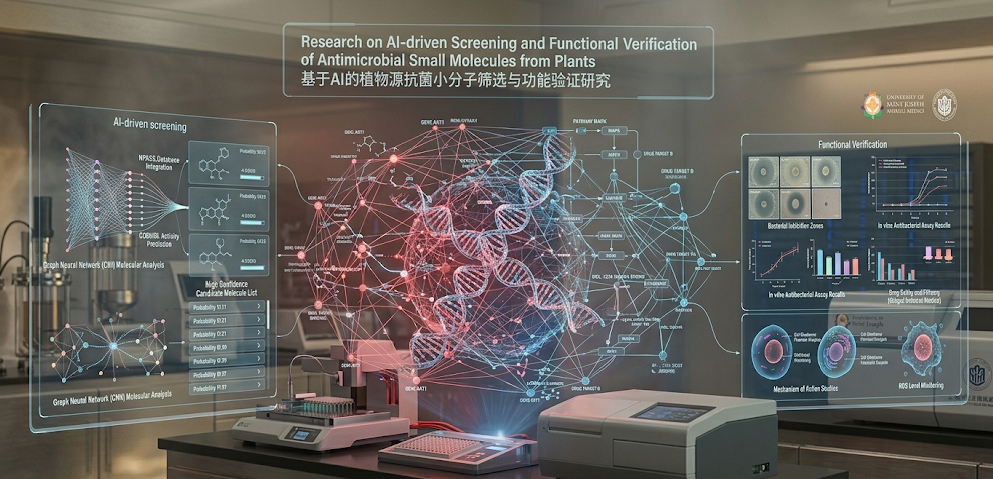
In response to the increasingly severe global challenge of antimicrobial resistance (AMR), the traditional drug discovery process for plant-based natural products faces critical bottlenecks, including high blindness, low throughput, and difficulty in discovering synergistic effects. To address these issues, this project aims to establish an AI-driven high-throughput screening model for innovative plant-based small molecule antimicrobial drugs and build a standardized in vitro and in vivo functional verification system.
The core research involves building an AI-driven intelligent screening platform for plant-derived natural products with antimicrobial activity. By integrating multiple comprehensive databases such as NPASS and ChEMBL, the platform utilizes graph neural networks (GNN) and domain-adapted large language models (LLM) to predict molecular activity and synergy, ultimately outputting a list of high-confidence candidate molecules.
Following computational prediction, the project systematically evaluates the in vitro and in vivo antimicrobial efficacy and safety of the candidate small molecules. This includes purifying small molecule monomers through advanced omics technologies, conducting rigorous in vitro antibacterial assays, and assessing drug safety and efficacy in animal infection models. Furthermore, the project elucidates the mechanisms of action on pathogens or hosts from multiple perspectives, identifying action sites, analyzing effects on cell membrane potential and ROS levels, and pinpointing key interacting proteins.
The project features a strong collaborative framework, led by the University of Saint Joseph in Macau, which leverages its high-performance computing clusters and multimodal model development for upstream AI modeling and virtual screening. The Shanghai Institute of Materia Medica, Chinese Academy of Sciences, leads downstream functional verification and mechanism research. Together, the teams form a closed-loop model of "computational prediction - experimental verification - feedback iteration," aiming to break through traditional drug discovery bottlenecks and accelerate the development of novel antimicrobial therapies.

The escalating antimicrobial resistance (AMR) crisis demands innovative anti-infectives with novel mechanisms, yet natural product research remains constrained by low throughput and ambiguous mechanistic insights. Artificial intelligence (AI) is catalyzing a pivotal paradigm shift—from merely isolating active compounds to precisely deciphering their modes of action.
This review elucidates AI’s transformative role in bridging ethnopharmacological knowledge and modern pharmacology to decode the mechanisms of plant-derived anti-infectives. Case studies on berberine, baicalein, danshensu derivatives, and Coleus amboinicus-sourced rosmarinic acid derivatives demonstrate AI’s capacity to map traditional therapeutic concepts to specific pathways (e.g., biofilm inhibition, inflammasome modulation) and to predict precise binding interactions and pharmacophores.
Leveraging statistical correlations between ethnobotanical usage patterns and chemical similarity, we propose a "Knowledge–Data–Mechanism" three-layer framework centered on deep mechanistic insight. By integrating Chinese initiatives, such as the CNDR (China's National Drug Repository) database and the TCM-AI platform, with global traditional medicine wisdom, this strategy offers an actionable roadmap for modernizing anti-infective discovery.
Validated applications of this paradigm have demonstrated order-of-magnitude acceleration in mechanistic characterization, rapidly yielding structurally novel agents with well-defined, target-specific actions—a critical advancement in addressing the urgent global threat of antimicrobial resistance.